149 lines
9.6 KiB
Markdown
149 lines
9.6 KiB
Markdown

|
---
|
||
|
|
comments: true
|
||
|
|
description: Discover a variety of models supported by Ultralytics, including YOLOv3 to YOLO11, NAS, SAM, and RT-DETR for detection, segmentation, and more.
|
||
|
|
keywords: Ultralytics, supported models, YOLOv3, YOLOv4, YOLOv5, YOLOv6, YOLOv7, YOLOv8, YOLOv9, YOLOv10, YOLO11, SAM, SAM2, SAM3, MobileSAM, FastSAM, YOLO-NAS, RT-DETR, YOLO-World, object detection, image segmentation, classification, pose estimation, multi-object tracking
|
||
|
|
---
|
||
|
|
|
||
|
|
# Models Supported by Ultralytics
|
||
|
|
|
||
|
|
Welcome to Ultralytics' model documentation! We offer support for a wide range of models, each tailored to specific tasks like [object detection](../tasks/detect.md), [instance segmentation](../tasks/segment.md), [image classification](../tasks/classify.md), [pose estimation](../tasks/pose.md), and [multi-object tracking](../modes/track.md). If you're interested in contributing your model architecture to Ultralytics, check out our [Contributing Guide](../help/contributing.md).
|
||
|
|
|
||
|
|
|
||
|
|
|
||
|
|
## Featured Models
|
||
|
|
|
||
|
|
Here are some of the key models supported:
|
||
|
|
|
||
|
|
1. **[YOLOv3](yolov3.md)**: The third iteration of the YOLO model family, originally by Joseph Redmon, known for its efficient real-time object detection capabilities.
|
||
|
|
2. **[YOLOv4](yolov4.md)**: A darknet-native update to YOLOv3, released by Alexey Bochkovskiy in 2020.
|
||
|
|
3. **[YOLOv5](yolov5.md)**: An improved version of the YOLO architecture by Ultralytics, offering better performance and speed trade-offs compared to previous versions.
|
||
|
|
4. **[YOLOv6](yolov6.md)**: Released by [Meituan](https://www.meituan.com/) in 2022, and in use in many of the company's autonomous delivery robots.
|
||
|
|
5. **[YOLOv7](yolov7.md)**: Updated YOLO models released in 2022 by the authors of YOLOv4. Only inference is supported.
|
||
|
|
6. **[YOLOv8](yolov8.md)**: A versatile model featuring enhanced capabilities such as [instance segmentation](https://www.ultralytics.com/glossary/instance-segmentation), pose/keypoints estimation, and classification.
|
||
|
|
7. **[YOLOv9](yolov9.md)**: An experimental model trained on the Ultralytics [YOLOv5](yolov5.md) codebase implementing Programmable Gradient Information (PGI).
|
||
|
|
8. **[YOLOv10](yolov10.md)**: By Tsinghua University, featuring NMS-free training and efficiency-accuracy driven architecture, delivering state-of-the-art performance and latency.
|
||
|
|
9. **[YOLO11](yolo11.md)**: Ultralytics' YOLO models delivering high performance across multiple tasks including detection, segmentation, pose estimation, tracking, and classification.
|
||
|
|
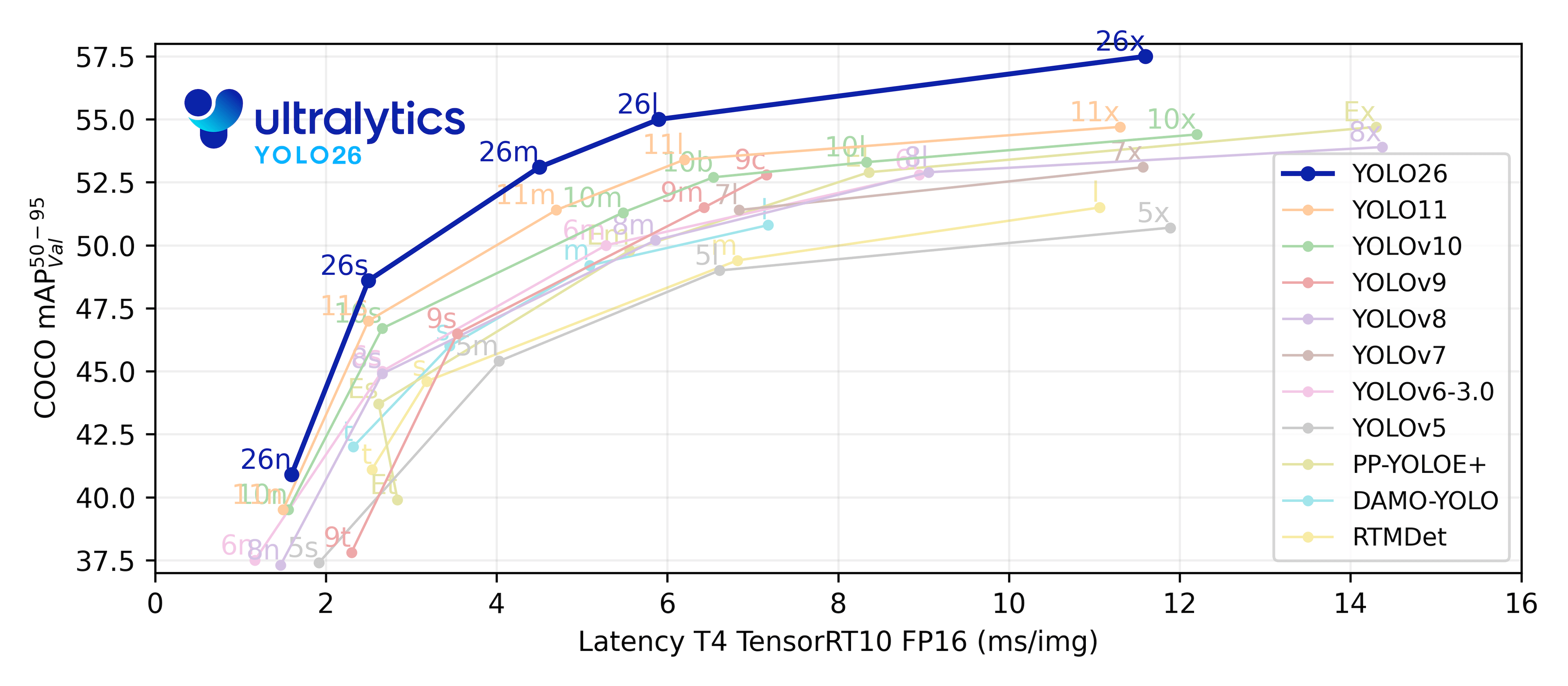
10. **[YOLO26](yolo26.md) 🚀 NEW**: Ultralytics' **latest** next-generation YOLO model optimized for edge deployment with end-to-end NMS-free inference.
|
||
|
|
11. **[Segment Anything Model (SAM)](sam.md)**: Meta's original Segment Anything Model (SAM).
|
||
|
|
12. **[Segment Anything Model 2 (SAM2)](sam-2.md)**: The next generation of Meta's Segment Anything Model for videos and images.
|
||
|
|
13. **[Segment Anything Model 3 (SAM3)](sam-3.md) 🚀 NEW**: Meta's third generation Segment Anything Model with Promptable Concept Segmentation for text and image exemplar-based segmentation.
|
||
|
|
14. **[Mobile Segment Anything Model (MobileSAM)](mobile-sam.md)**: MobileSAM for mobile applications, by Kyung Hee University.
|
||
|
|
15. **[Fast Segment Anything Model (FastSAM)](fast-sam.md)**: FastSAM by Image & Video Analysis Group, Institute of Automation, Chinese Academy of Sciences.
|
||
|
|
16. **[YOLO-NAS](yolo-nas.md)**: YOLO [Neural Architecture Search](https://www.ultralytics.com/glossary/neural-architecture-search-nas) (NAS) Models.
|
||
|
|
17. **[Real-Time Detection Transformers (RT-DETR)](rtdetr.md)**: Baidu's PaddlePaddle real-time Detection [Transformer](https://www.ultralytics.com/glossary/transformer) (RT-DETR) models.
|
||
|
|
18. **[YOLO-World](yolo-world.md)**: Real-time Open Vocabulary Object Detection models from Tencent AI Lab.
|
||
|
|
19. **[YOLOE](yoloe.md)**: An improved open-vocabulary object detector that maintains YOLO's real-time performance while detecting arbitrary classes beyond its training data.
|
||
|
|
|
||
|
|
<p align="center">
|
||
|
|
<br>
|
||
|
|
<iframe loading="lazy" width="720" height="405" src="https://www.youtube.com/embed/MWq1UxqTClU?si=nHAW-lYDzrz68jR0"
|
||
|
|
title="YouTube video player" frameborder="0"
|
||
|
|
allow="accelerometer; autoplay; clipboard-write; encrypted-media; gyroscope; picture-in-picture; web-share"
|
||
|
|
allowfullscreen>
|
||
|
|
</iframe>
|
||
|
|
<br>
|
||
|
|
<strong>Watch:</strong> Run Ultralytics YOLO models in just a few lines of code.
|
||
|
|
</p>
|
||
|
|
|
||
|
|
## Getting Started: Usage Examples
|
||
|
|
|
||
|
|
This example provides simple YOLO training and inference examples. For full documentation on these and other [modes](../modes/index.md) see the [Predict](../modes/predict.md), [Train](../modes/train.md), [Val](../modes/val.md) and [Export](../modes/export.md) docs pages.
|
||
|
|
|
||
|
|
Note the below example spotlights YOLO11 [Detect](../tasks/detect.md) models for [object detection](https://www.ultralytics.com/glossary/object-detection). For additional supported tasks see the [Segment](../tasks/segment.md), [Classify](../tasks/classify.md) and [Pose](../tasks/pose.md) docs.
|
||
|
|
|
||
|
|
!!! example
|
||
|
|
|
||
|
|
=== "Python"
|
||
|
|
|
||
|
|
[PyTorch](https://www.ultralytics.com/glossary/pytorch) pretrained `*.pt` models as well as configuration `*.yaml` files can be passed to the `YOLO()`, `SAM()`, `NAS()` and `RTDETR()` classes to create a model instance in Python:
|
||
|
|
|
||
|
|
```python
|
||
|
|
from ultralytics import YOLO
|
||
|
|
|
||
|
|
# Load a COCO-pretrained YOLO26n model
|
||
|
|
model = YOLO("yolo26n.pt")
|
||
|
|
|
||
|
|
# Display model information (optional)
|
||
|
|
model.info()
|
||
|
|
|
||
|
|
# Train the model on the COCO8 example dataset for 100 epochs
|
||
|
|
results = model.train(data="coco8.yaml", epochs=100, imgsz=640)
|
||
|
|
|
||
|
|
# Run inference with the YOLO26n model on the 'bus.jpg' image
|
||
|
|
results = model("path/to/bus.jpg")
|
||
|
|
```
|
||
|
|
|
||
|
|
=== "CLI"
|
||
|
|
|
||
|
|
CLI commands are available to directly run the models:
|
||
|
|
|
||
|
|
```bash
|
||
|
|
# Load a COCO-pretrained YOLO26n model and train it on the COCO8 example dataset for 100 epochs
|
||
|
|
yolo train model=yolo26n.pt data=coco8.yaml epochs=100 imgsz=640
|
||
|
|
|
||
|
|
# Load a COCO-pretrained YOLO26n model and run inference on the 'bus.jpg' image
|
||
|
|
yolo predict model=yolo26n.pt source=path/to/bus.jpg
|
||
|
|
```
|
||
|
|
|
||
|
|
## Contributing New Models
|
||
|
|
|
||
|
|
Interested in contributing your model to Ultralytics? Great! We're always open to expanding our model portfolio.
|
||
|
|
|
||
|
|
1. **Fork the Repository**: Start by forking the [Ultralytics GitHub repository](https://github.com/ultralytics/ultralytics).
|
||
|
|
|
||
|
|
2. **Clone Your Fork**: Clone your fork to your local machine and create a new branch to work on.
|
||
|
|
|
||
|
|
3. **Implement Your Model**: Add your model following the coding standards and guidelines provided in our [Contributing Guide](../help/contributing.md).
|
||
|
|
|
||
|
|
4. **Test Thoroughly**: Make sure to test your model rigorously, both in isolation and as part of the pipeline.
|
||
|
|
|
||
|
|
5. **Create a Pull Request**: Once you're satisfied with your model, create a pull request to the main repository for review.
|
||
|
|
|
||
|
|
6. **Code Review & Merging**: After review, if your model meets our criteria, it will be merged into the main repository.
|
||
|
|
|
||
|
|
For detailed steps, consult our [Contributing Guide](../help/contributing.md).
|
||
|
|
|
||
|
|
## FAQ
|
||
|
|
|
||
|
|
### What is the latest Ultralytics YOLO model?
|
||
|
|
|
||
|
|
The latest Ultralytics YOLO model is [YOLO26](yolo26.md), released in January 2026. YOLO26 features end-to-end NMS-free inference, optimized edge deployment, and supports all five tasks (detection, segmentation, classification, pose estimation, and OBB) plus open-vocabulary versions. For stable production workloads, both YOLO26 and [YOLO11](yolo11.md) are recommended choices.
|
||
|
|
|
||
|
|
### How can I train a YOLO model on custom data?
|
||
|
|
|
||
|
|
Training a YOLO model on custom data can be easily accomplished using Ultralytics' libraries. Here's a quick example:
|
||
|
|
|
||
|
|
!!! example
|
||
|
|
|
||
|
|
=== "Python"
|
||
|
|
|
||
|
|
```python
|
||
|
|
from ultralytics import YOLO
|
||
|
|
|
||
|
|
# Load a YOLO model
|
||
|
|
model = YOLO("yolo26n.pt") # or any other YOLO model
|
||
|
|
|
||
|
|
# Train the model on custom dataset
|
||
|
|
results = model.train(data="custom_data.yaml", epochs=100, imgsz=640)
|
||
|
|
```
|
||
|
|
|
||
|
|
=== "CLI"
|
||
|
|
|
||
|
|
```bash
|
||
|
|
yolo train model=yolo26n.pt data='custom_data.yaml' epochs=100 imgsz=640
|
||
|
|
```
|
||
|
|
|
||
|
|
For more detailed instructions, visit the [Train](../modes/train.md) documentation page.
|
||
|
|
|
||
|
|
### Which YOLO versions are supported by Ultralytics?
|
||
|
|
|
||
|
|
Ultralytics supports a comprehensive range of YOLO (You Only Look Once) versions from YOLOv3 to YOLO11, along with models like YOLO-NAS, SAM, and RT-DETR. Each version is optimized for various tasks such as detection, segmentation, and classification. For detailed information on each model, refer to the [Models Supported by Ultralytics](../models/index.md) documentation.
|
||
|
|
|
||
|
|
### Why should I use Ultralytics Platform for [machine learning](https://www.ultralytics.com/glossary/machine-learning-ml) projects?
|
||
|
|
|
||
|
|
[Ultralytics Platform](../platform/index.md) provides a no-code, end-to-end platform for training, deploying, and managing YOLO models. It simplifies complex workflows, enabling users to focus on model performance and application. The HUB also offers [cloud training capabilities](../platform/train/cloud-training.md), comprehensive dataset management, and user-friendly interfaces for both beginners and experienced developers.
|
||
|
|
|
||
|
|
### What types of tasks can Ultralytics YOLO models perform?
|
||
|
|
|
||
|
|
Ultralytics YOLO models are versatile and can perform tasks including object detection, instance segmentation, classification, pose estimation, and oriented object detection (OBB). The latest model, [YOLO26](yolo26.md), supports all five tasks plus open-vocabulary detection. For details on specific tasks, refer to the [Task pages](../tasks/index.md).
|